Atsumare! Future Musicians -Together Through Music

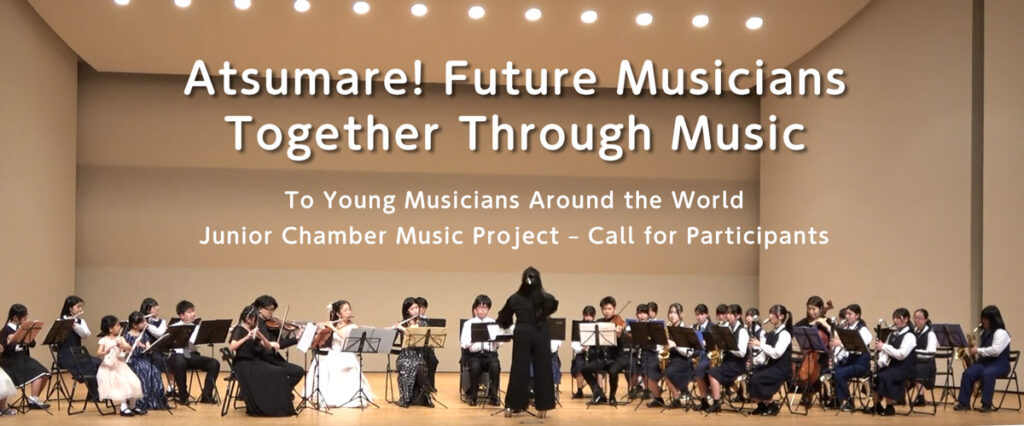 Joint performance by children from Japan and Singapore (last year)
To Young Musicians Around the World
Junior Chamber Music Project – Call for Participants
Be more than a performer.
Become a musician who brings music to people
“Atsumare! Future Musicians” is an international chamber music project in which children from around the world meet through music, connect with one another, and create a shared stage performance.
Participants will build on the performance skills and musical expression they have developed through their regular lessons while working on chamber music with young musicians from different countries and cultural backgrounds, as well as with professional musicians.
The performances will take place in Japan.
Based in Mabi Town, Kurashiki City, Okayama Prefecture, and Niiza City, Saitama Prefecture, participants will create music together with friends gathering from around the world.
In this project, participants will not meet one another for the first time on the day of the performance.
Before coming to Japan, they will communicate from their respective countries through video letters and other forms of exchange. By sharing their daily lives, cultures, and feelings about music, they will gradually build friendships.
Finally, they will meet in Japan and perform together, united through chamber music.
This project is about more than simply performing music.
Participants will discuss questions such as:
“How can we communicate the appeal of music more effectively?”
“How can we unite our hearts with friends from around the world?”
“How can we bring joy to the local community?”
“How can we connect people across national borders through music?”
Through conversations with one another, participants will develop their performances together.
Based on the ideas that emerge from these discussions, Mimumimu no Mori will create an original story, which will be performed by professional actors.
At the final concert, music performed by children and professional musicians from around the world will be combined with theatre to create a special performance for the local community.
In chamber music, every participant plays a leading role.
By listening carefully to one another and communicating their own ideas, participants will work together to create a single musical performance.
Through this process, they will develop:
• the ability to listen to and understand the thoughts and feelings of others;
• the ability to communicate their own ideas;
• the ability to respect diverse values and perspectives;
• the ability to connect with people around the world through music.
Musicians need more than performance skills.
They also need the ability to communicate across national and language differences, create something together with others, and share the joy of music with people around the world.
“Atsumare! Future Musicians” aims to help young musicians connect with the world through chamber music and develop the ability to create and expand their own performance opportunities.
We hope that the musicians of the future will connect people and countries through music, while nurturing new cultures and friendships.
A Message from Mimumimu no Mori
We hope that the encounters and learning experiences created through music will contribute to the future of every participating child.
We also hope that these experiences will become a small but meaningful step toward passing on to future generations a local culture in which music continues to live and flourish.
Application Information
Eligibility
Elementary school, junior high school, and high school students
Participation Fee
JPY 80,000 per participant
*The fee applies separately to the Eastern Japan and Western Japan programs.
Included in the Participation Fee
• Chamber music lessons
• Japanese cultural exchange activities, such as kagura and the tea ceremony
• Participation in the concert
• Interpretation and program administration costs
Expenses to Be Paid by Participants
• Airfare
• Accommodation
• Meals
Application Process
1. Submit your application form and audio recording.
2. The organizing committee will review the submitted recordings.
3. Successful applicants will receive an acceptance email with a Peatix payment link (online payment service).
4. Participation will be confirmed after payment is completed.
Schedule and Venue
Eastern Japan Program
Wind Instrument Division
Location:Niiza City, Saitama Prefecture, Japan
Eligibility
Elementary school, junior high school, and high school students
Applicants must have previous experience playing an instrument.
Eligible Instruments
- Piccolo
- Flute
- Alto flute
- Bass flute
- Oboe
- English horn
- B-flat clarinet
- E-flat clarinet
- Alto clarinet
- Bass clarinet
- Bassoon
- Contrabassoon
- Soprano saxophone
- Alto saxophone
- Tenor saxophone
- Baritone saxophone
Venue
Niiza City, Saitama Prefecture
Participation Schedule
| 1. Application Period | Wednesday, June 10, 2026–Saturday, October 31, 2026 Apply here » Applications will close once the maximum number of participants has been reached. |
|---|---|
| 2. Recorded Audition | Friday, July 10, 2026–Saturday, October 31, 2026 Submission Requirement One piece of the applicant’s choice approximately 3 minutesNotification of Results Applicants will be notified by email within two weeks after submitting their recording. Note: The audition will close once the maximum number of participants has been selected. |
| 3. Exchange of Video Messages or Letters with Japanese Children | Submission deadline: November 18, 2026 Please submit your video message or letter by November 18, 2026, for exchange with the Japanese children participating in the project. The Japanese children will also share their own messages or letters with you. Purpose Participants will begin interacting with the Japanese children before meeting them in person. By getting to know one another in advance, they will be able to create music together in a deeper and more meaningful way. |
| 4. Musical and Cultural Exchange Program in Japan | Tuesday, December 15, 2026 • Arrival in Japan • Travel to Niiza City Wednesday, December 16, 2026 • Morning: Orientation • Afternoon: Individual lesson Thursday, December 17, 2026 • Morning: Visit to a Japanese school • Afternoon: Joint rehearsal with Japanese children Friday, December 18, 2026 • Morning: Japanese cultural exchange, such as kagura and the tea ceremony Note: Dates and times are subject to change. • Afternoon: Joint rehearsal with Japanese children Saturday, December 19, 2026 Venue: Niiza Civic Hall • Morning and afternoon: Joint rehearsals |
| 5. Eastern Japan Junior Chamber Music Concert | Sunday, December 20, 2026 Venue Niiza Civic HallSchedule • Morning: Final rehearsal • Afternoon: Performance in the Eastern Japan Junior Chamber Music Concert • After the concert: Program concludes and participants are dismissed |
Coaches and Performing Artists
Masaru Nakayama, oboe
Graduate of the Hochschule für Musik Detmold, Germany
Noriko Ono, flute
Graduate of the Hochschule für Musik Detmold, Germany
Repertoire and Available Parts
Ludwig van Beethoven
Piano Sonata No. 8 in C Minor, “Pathétique,” Second Movement
Woodwind trio arrangement
Example Instrumentation
• Flute or oboe
• B-flat clarinet
• Bassoon
Possible Same-Instrument Ensembles
• Flute trio
• Oboe trio
• Clarinet trio
• Saxophone trio: soprano, alto, and tenor saxophones
Ludwig van Beethoven
Minuet in G Major, WoO 10, No. 2
Woodwind trio arrangement
Example Instrumentation
• Flute or oboe
• B-flat clarinet
• Bassoon
Possible Same-Instrument Ensembles
• Flute trio
• Oboe trio
• Clarinet trio
• Saxophone trio
Ludwig van Beethoven
Septet in E-flat Major, Op. 20
Woodwind quintet arrangement
Example Instrumentation
• Flute
• Oboe
• B-flat clarinet
• Alto saxophone or alto clarinet as a substitute for the horn part
• Bassoon
Other Possible Instrumentations
• Flute, oboe, clarinet, tenor saxophone, and bassoon
• Flute, two clarinets, alto clarinet, and bass clarinet
Ludwig van Beethoven
Turkish March
Woodwind quintet arrangement
Example Instrumentation
• Flute or piccolo
• Oboe
• B-flat clarinet
• Alto saxophone
• Bassoon
Other Possible Instrumentations
• Flute, two clarinets, alto clarinet, and bass clarinet
• Saxophone quintet: soprano, two alto, tenor, and baritone saxophones
Ludwig van Beethoven
Symphony No. 6, “Pastoral”
Woodwind octet arrangement
Example Instrumentation
• Flute
• Oboe
• Two B-flat clarinets
• Two bassoons
• Alto saxophone
• Baritone saxophone
Other Possible Instrumentations
• Two flutes, two oboes, two clarinets, and two bassoons
• Clarinet octet
• Saxophone octet
Ludwig van Beethoven
Symphony No. 7, Second Movement
Woodwind octet arrangement
Example Instrumentation
• Flute
• Oboe
• Two B-flat clarinets
• Two bassoons
• Tenor saxophone
• Baritone saxophone
Additional Instruments That May Be Used
• Alto flute
• English horn
• Alto clarinet
• Bass clarinet
Ludwig van Beethoven
Egmont Overture
Woodwind dectet arrangement
Example Instrumentation
• Piccolo
• Flute
• Oboe
• Two B-flat clarinets
• Two bassoons
• Alto saxophone
• Tenor saxophone
• Baritone saxophone
Additional Instruments That May Be Used
• Alto flute
• English horn
• Bass clarinet
• Contrabassoon
Ludwig van Beethoven
Coriolan Overture
Woodwind dectet arrangement
Example Instrumentation
• Piccolo
• Flute
• Oboe
• Two B-flat clarinets
• Two bassoons
• Alto saxophone
• Tenor saxophone
• Baritone saxophone
Additional Instruments That May Be Used
• Alto flute
• English horn
• E-flat clarinet
• Bass clarinet
• Contrabassoon
Western Japan Program
Piano and String Instrument Division
Location
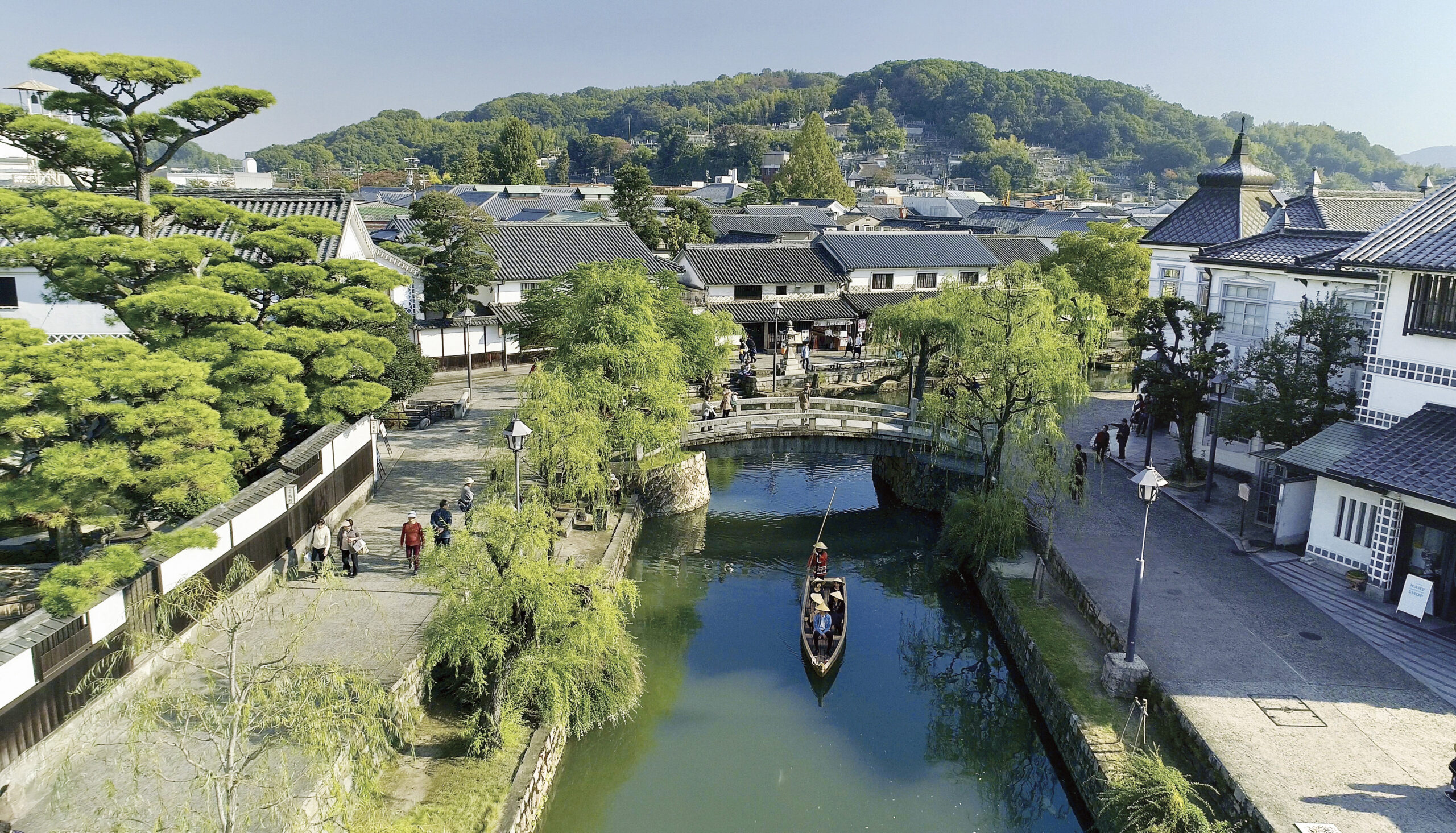
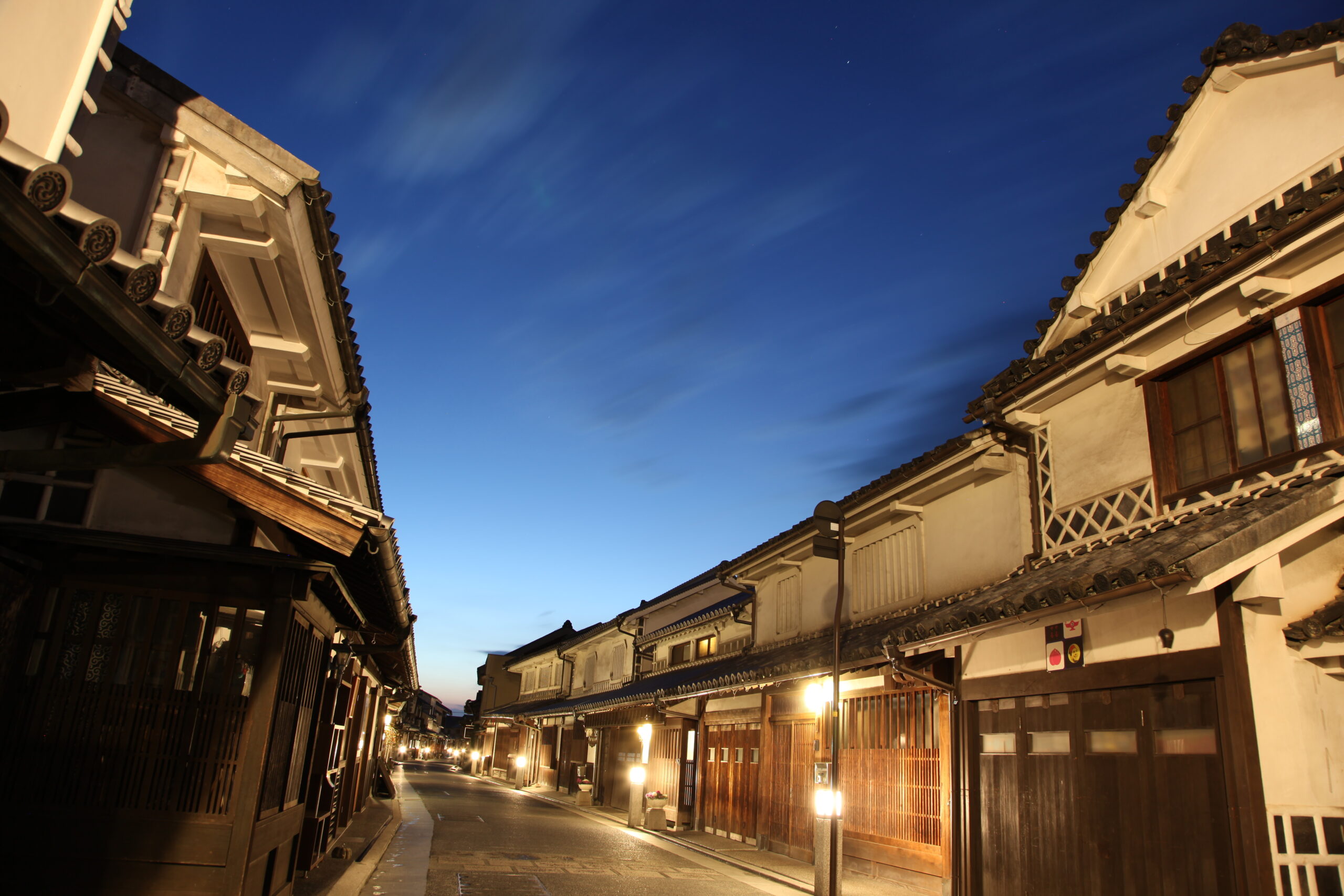
Mabi Town, Kurashiki City, Okayama Prefecture, Japan
Eligibility
Elementary school, junior high school, and high school students
Applicants must have previous experience playing an instrument.
Eligible Instruments
- Violin
- Viola
- Cello
- Double bass
- Piano
Venue
Mabi Town, Kurashiki City, Okayama Prefecture
Participation Schedule
| 1. Application Period | Thursday, September 10, 2026–Sunday, Tuesday, April 20, 2027 Apply here » |
|---|---|
| 2. Recorded Audition | Thursday, September 10, 2026– Tuesday, April 20, 2027 Submission Requirement Please submit a recording of an excerpt (approximately 3 minutes) from the concert piece you have selected from the required repertoire.Notification of Results Applicants will be notified by email within two weeks after submitting their recording. Note: The audition will close once the maximum number of participants has been selected. |
| 3. Exchange of Video Messages or Letters with Japanese Children | Submission Deadline:April 30, 2027 Please submit your video message or letter by April 30, 2027, for exchange with the Japanese children participating in the project. The Japanese children will also share their own messages or letters with you. Purpose Participants will begin interacting with the Japanese children before meeting them in person. By getting to know one another in advance, they will be able to create music together in a deeper and more meaningful way. |
| 4. Cultural Exchange Program in Japan | Tuesday, June 15, 2027 • Arrival at Kansai International Airport (KIX), Japan • Travel to Kurashiki City(approximately 3 hours by train) Wednesday, June 16, 2027 • Free Time in Kurashiki Thursday, June 17, 2027 • Morning: Visit to a Japanese school • Afternoon: Joint rehearsal with Japanese children Friday, June 18, 2027 • Morning: Japanese cultural exchange, such as kagura and the tea ceremony Note: Dates and times are subject to change. • Afternoon: Joint rehearsal with Japanese children Saturday, June 19, 2027 Venue: Mabi Fureai Center • Morning and afternoon: Joint rehearsals at Mabi Fureai Center |
| 5. Western Japan Junior Chamber Music Concert | Sunday, June 20, 2027
Venue Schedule |
Repertoire and Available Parts
Wolfgang Amadeus Mozart
Oboe Quartet in F Major, K. 370
Available Parts
• Violin
• Viola
• Cello
Movements
• First movement
• Second movement
• Third movement
Coach and Performing Artist
Masaru Nakayama, oboe
Graduate of the Hochschule für Musik Detmold, Germany
Wolfgang Amadeus Mozart
Piano Concerto No. 12 in A Major, K. 414
Chamber music version with flute
Available Parts
• Piano
• Violin
• Viola
• Cello
• Double bass
Movements
• First movement
• Second movement
• Third movement
Coach and Performing Artist
Noriko Ono, flute
Graduate of the Hochschule für Musik Detmold, Germany
Wolfgang Amadeus Mozart
Piano Quartet No. 1 in G Minor, K. 478
Available Parts
• Violin
• Viola
• Cello
Movements
• First movement
• Second movement
• Third movement
Coach and Performing Artist
Mari Mimura, piano
Graduate of the University of California, Los Angeles (UCLA)
Franz Schubert
Piano Quintet in A Major, “The Trout”
Available Parts
• Piano
• Violin
• Viola
• Cello
Movements
• First movement
• Second movement
• Third movement
• Fourth movement
Coach and Performing Artist
Keita Tadokoro, double bass
Graduate of the Berlin University of the Arts, Germany